Phalombe-based farmer Ramsy Salimu could not hold back tears as all seven of his tobacco bales were rejected at Limbe Auction Floors last Thursday. Standing before Agriculture Minister Roza Mbilizi, Salimu cried out: “No way! I cannot believe this. So, what do they want us to do with it?”
His anguish captured the mood of hundreds of farmers who had arrived with hope, only to watch their hard‑earned crop turned away bale after bale.
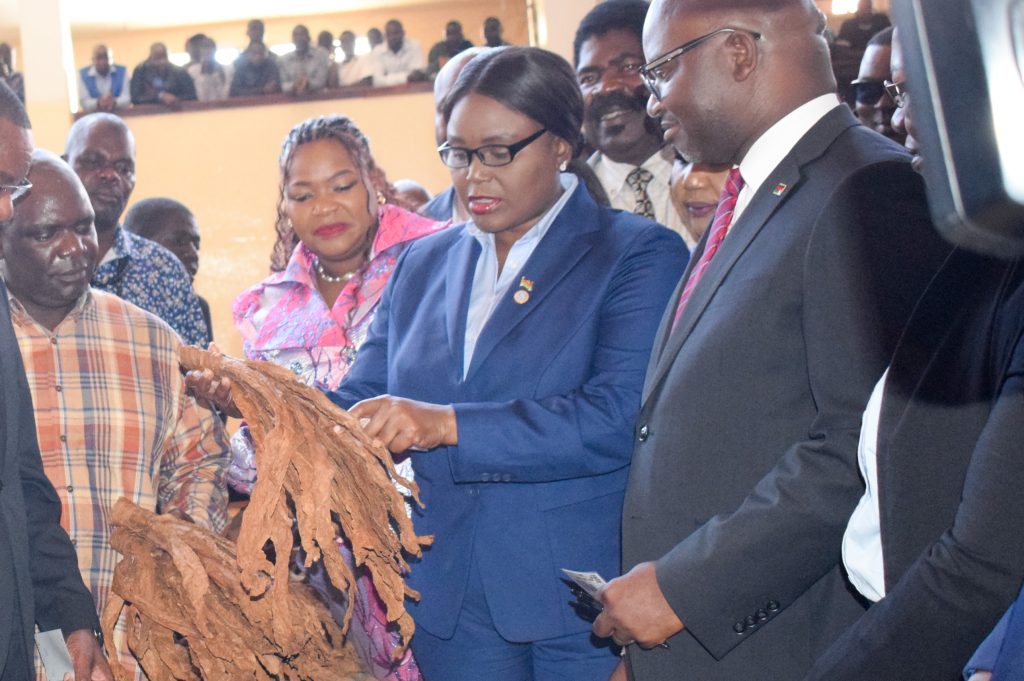
Auction Floors. I Andrew Nyondo
For many, rejection meant wasted sweat, fertiliser, and loans taken in the hope of repayment after sales. “Rejection means all my sweat, fertiliser and loans taken in the hope of repaying after sales,” said farmer Joseph Njoka.
The opening of Malawi’s 2026 tobacco marketing season has laid bare the crisis facing growers. At Limbe, by 10:10 a.m., 100 bales had been presented, but only three were accepted , presenting a 97 percent rejection rate.
Later in the day, the figure climbed to 98 percent, according to Tobacco Commission spokesperson Triphorus Chigwenembe.
“Our observation is that rejection rates under contract farming arrangements are significantly lower. When combined with auction figures, the overall rejection rate is estimated at around 26 percent in some cases,” he said.

Chigwenembe noted that farmers under contract farming arrangements faced lower rejection rates, bringing the combined figure down to about 26 percent.
“Our observation is that rejection rates under contract farming arrangements are significantly lower. When combined with auction figures, the overall rejection rate is estimated at around 26 percent in some cases,” he said
Similar scenes unfolded at Lilongwe and Chinkhoma auction floors, which opened earlier in the week, recording rejection rates of 98 percent and 96.7 percent respectively, among the highest in Malawi’s marketing history.
Mbilizi attributed the rejections to poor grading and procedural lapses, including failure to present minimum price cards. She admitted that extension workers were not providing adequate technical support to farmers.
Tobacco Farmers Association of Malawi Trust president Abiel Kalima-Banda described the atmosphere as the worst he had ever witnessed, urging government to investigate buyers.
“It’s a sorry situation for farmers selling through the auction system. Only three or four bales have been bought. There must be something happening beyond quality,” he said.
Under Malawi’s tobacco laws, licensed buyers are permitted to reject tobacco that does not meet specified standards, particularly if it falls outside the grade or class outlined in their licences.
However, the law also provides that a licence may be revoked or suspended if a buyer violates its conditions or fails to comply with regulatory requirements.
Agriculture expert Tamani‑Nkono Mvula pointed to weak control across the value chain and overproduction, which has tilted power towards buyers.
“There is limited control from the field to the market, and that creates room for exploitation by buyers, both in contract farming and the auction system,” he said.
He said overproduction has further tilted the balance of power in favour of buyers.
“These companies work with fixed budgets. When there is oversupply, buyers exploit farmers by downgrading tobacco or citing poor quality to pay less,” he said.
“Right now, it is auction farmers who are protesting, but even contract farmers are exposed to the same risk. Buyers can still downgrade their tobacco or claim poor quality to pay less, knowing that desperate farmers have limited alternatives. In the end, many are forced to sell at very low prices because they have nowhere else to go.”
Mvula warned that the situation could worsen as the season progresses
The Second Round Tobacco Production Estimates Survey projects Malawi will produce 197 million kilogrammes of tobacco this year, against buyers’ demand of 170 million kilogrammes, a 14 percent surplus.
Opening prices also signal weaker returns compared to last year. Under contract farming, the highest price was $3 per kg (about K5 252), down from $3.20 last year. Auction prices peaked at $2.50 per kg (about K4 377), with lows at $2, compared to last year’s $1.80.
For farmers like Salimu, the numbers translate into heartbreak. After months of toil in the fields, they now face rejection, debt and despair.